Digital printing is a process that transfers digital files directly onto materials such as paper, packaging, textiles, and labels, without requiring conventional printing plates. The industry is shifting toward shorter production runs, faster customization, and more automated workflows, while facing pressure to improve sustainability and manage changing equipment and input costs. Smithers forecasts the global digital print market will reach about $230.5 billion in 2032, up from $167.5 billion in 2022. These changes are reshaping the technology mix, business models, and skills required across commercial, packaging, and textile printing.
Digital printing technology and market change
Digital printing describes printing from digital data rather than from a fixed physical image carrier such as a plate. The definition covers several processes, but inkjet and electrophotography—often called toner printing—are its principal commercial categories. The International Organization for Standardization’s terminology distinguishes digital printing by its direct use of digital data in the printing process; in practice, the distinction matters because it enables variable content and avoids plate-making for each job.
Market growth reflects changing demand, not a uniform replacement of conventional presses. Digital equipment is especially useful when jobs are short, versions vary, or deadlines are tight. Flexographic, offset, gravure, and screen processes remain competitive for many long, stable runs. The practical industry shift is therefore toward hybrid production: selecting the process—or combination of processes—that best fits run length, substrate, quality, cost, and delivery requirements.
Inkjet printing
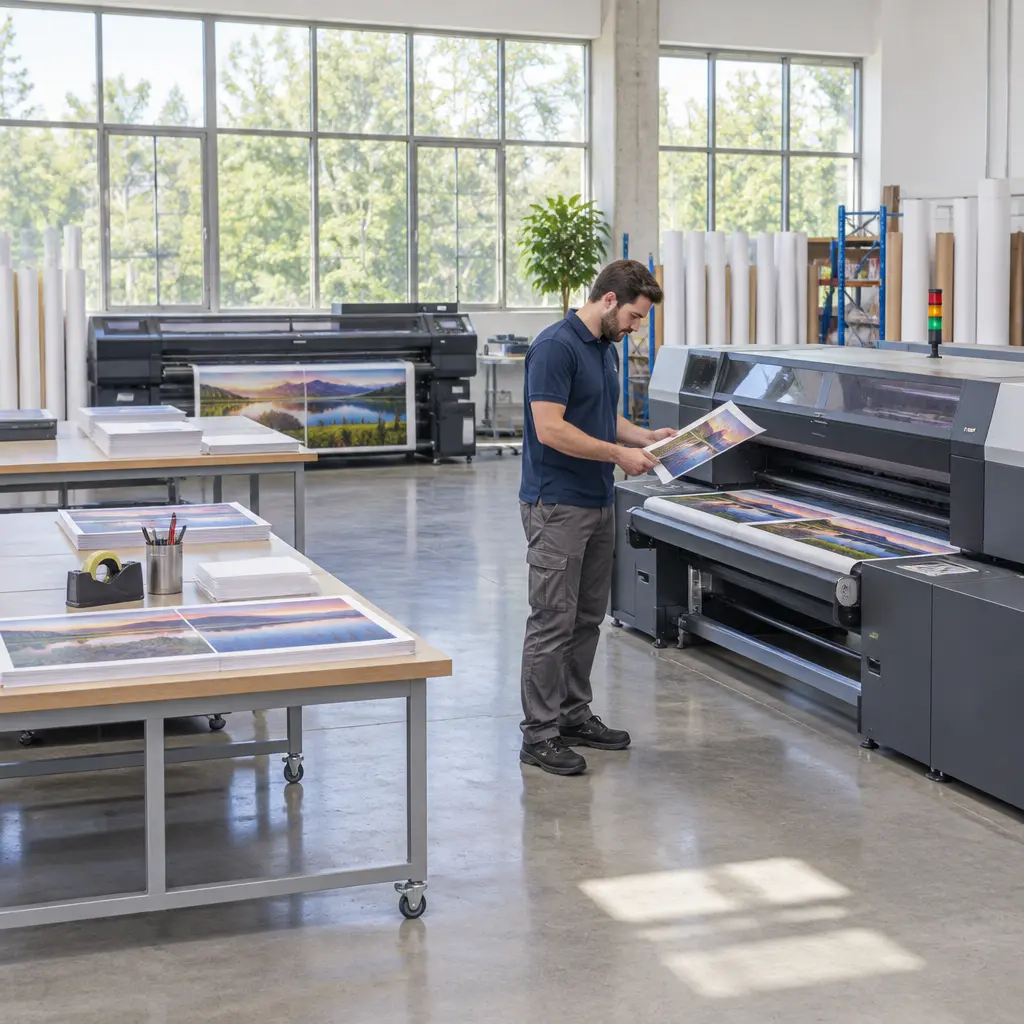
Inkjet printing places tiny droplets of ink onto a substrate, either ejecting them only when needed (drop-on-demand) or using a continuous stream of droplets. Its flexibility supports large-format graphics, direct-to-shape decoration, commercial print, labels, packaging, and textiles. Smithers identifies inkjet as a major driver of digital-print growth, with advances in printheads, inks, and production speeds helping the technology reach more industrial applications.
Inkjet’s strengths include variable data, scalable job sizes, and the ability to print on a growing range of materials. Its limits depend on the application: ink adhesion, curing or drying, color consistency, and the cost of specialized inks can affect productivity. Water-based, UV-curable, solvent, and other ink systems each suit different substrates and operating conditions, so investment decisions require testing the complete workflow rather than comparing press speed alone.
Electrophotography and toner printing
Electrophotography forms an image through electrically charged areas and transfers toner to paper or another suitable substrate, where heat or pressure fixes it in place. It is established in office and production printing, particularly for books, direct mail, brochures, and other work with frequent job changes. The technology supports personalized content and efficient short runs, although format, substrate compatibility, finishing needs, and per-page economics can constrain particular uses.
Inkjet and toner therefore serve overlapping but not identical needs. A printer choosing between them should evaluate quality requirements, job mix, expected utilization, finishing equipment, consumables, and maintenance. This process-level comparison provides the foundation for understanding where digital adoption is most visible: in commercial print, packaging, labels, and textiles.
Digital printing applications and demand shifts
Digital printing’s applications are expanding because brands, publishers, and manufacturers increasingly need more versions and smaller quantities. Smithers’ market analysis projects continued growth through 2032, while industry surveys and equipment launches show sustained investment in higher-productivity presses. The clearest changes are in applications where customization, reduced inventory, and faster response can outweigh the advantages of long-run conventional production.
Commercial print and publishing
Commercial digital printing covers items such as marketing collateral, transactional mail, manuals, and books. It makes economical production of short runs and personalized versions more practical, and print-on-demand can reduce the need to warehouse large quantities of books. Publishers can use demand-based reprints to limit unsold inventory, although the best choice still depends on title volume, unit cost, paper availability, and delivery schedule.
Variable-data printing also allows a single campaign to contain customized names, offers, images, or regional information. This can improve relevance, but personalization is useful only when supported by accurate customer data, privacy safeguards, and effective campaign measurement. Digital presses thus shift some competitive advantage from print capacity alone toward data management and workflow integration.
Packaging and label printing
Digital packaging and label printing serves short production runs, seasonal designs, product variants, prototypes, and localized versions. It can help converters and brand owners avoid making plates for every design and may reduce the risk of holding obsolete printed packaging. Smithers has identified labels and packaging as important growth areas for digital print, although conventional flexography and other processes often remain more economical for large, stable volumes.
The application is shaped by regulatory and technical requirements, including migration limits for food-contact packaging, durability, color matching, and compatibility with converting and finishing lines. Digital production is therefore not simply a press purchase: printers must validate inks, substrates, curing, traceability, and downstream performance. The shift is most compelling where many versions or frequent artwork changes make conventional setup costs significant.
Textile and décor printing
Digital textile printing applies inkjet technologies to apparel, home furnishings, signage, and other fabric products. It can support on-demand designs, sampling, and smaller production batches, reducing the need to produce every pattern in large quantities. The European Commission’s Joint Research Centre has examined textile production’s environmental pressures, including resource use and pollution; digital processes can contribute to more targeted production, but their actual impact depends on ink chemistry, pretreatment, energy, water use, and fabric finishing.
Direct-to-garment and direct-to-film workflows have also lowered barriers for customized apparel and small businesses. Their growth illustrates a broader market pattern: digital equipment enables decentralized and made-to-order production, while online storefronts and automated order systems connect print capacity to individual buyers.
Automation, sustainability, and operating economics
As digital presses move into industrial settings, competitive performance depends on more than image quality. Automation, material efficiency, energy use, labor availability, and reliable delivery increasingly determine whether a digital workflow is commercially viable. These operational factors connect technological change to the economics and environmental claims made about the industry.
Workflow automation and labor
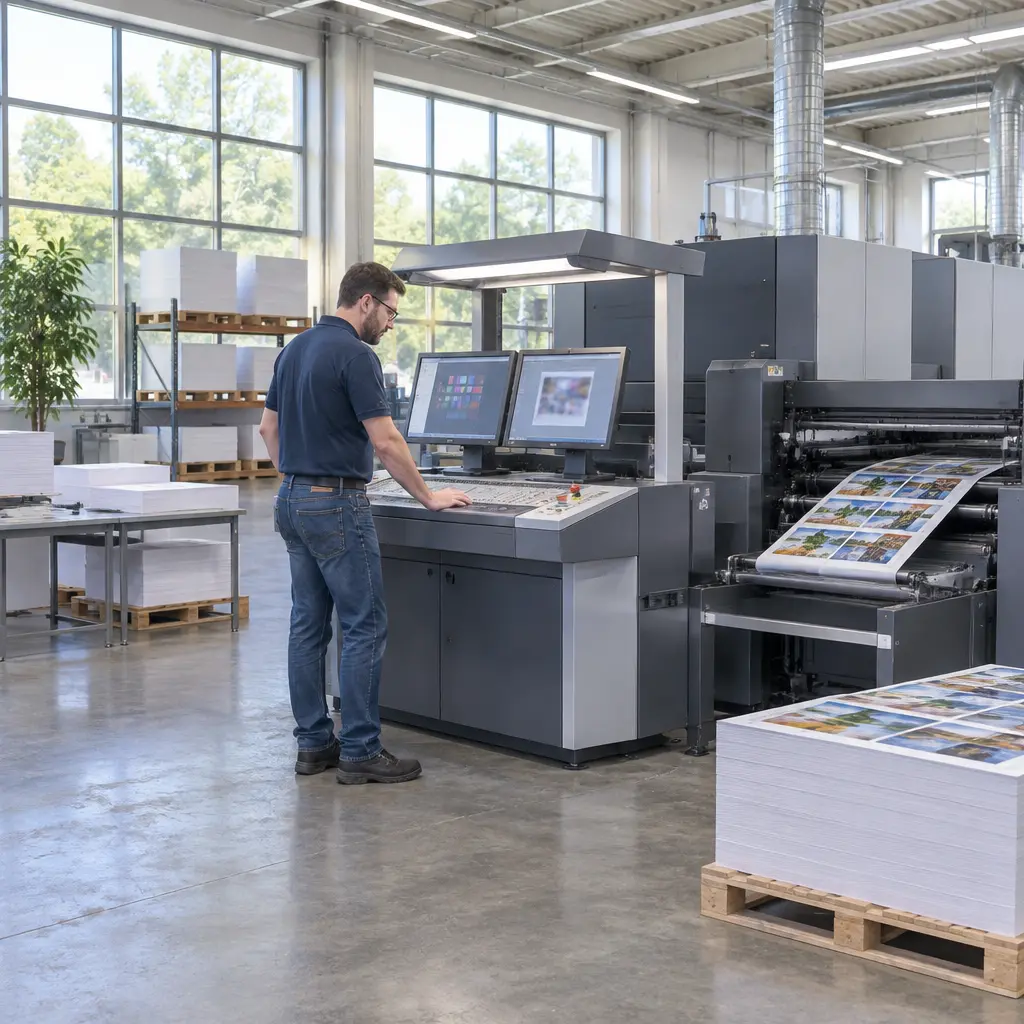
Print workflow automation links job submission, prepress checks, imposition, color management, scheduling, press control, finishing, and shipping. The Printing Industries of America and other industry bodies have long emphasized that automation can reduce repetitive manual steps and help manage shorter, more varied jobs. In practical terms, automated preflight and job routing can reduce avoidable delays, while connected production data helps managers identify bottlenecks.
Automation does not eliminate the need for skilled staff. It changes the skill mix toward color science, data handling, equipment maintenance, workflow configuration, and quality assurance. Printers adopting digital systems should budget for staff training and integration, since incompatible software or poorly standardized files can undermine the promised speed of a new press.
Sustainability and material efficiency
Digital print can reduce plate-making and setup waste and can make smaller, demand-led runs feasible. Those benefits do not automatically make every digital job environmentally preferable. A full assessment should consider substrate sourcing, ink and toner production, energy consumption, cleaning and maintenance, transport, recyclability, and unsold inventory. The U.S. Environmental Protection Agency’s waste hierarchy prioritizes source reduction, which makes right-sizing production and avoiding obsolete stock relevant goals for print buyers.
A useful comparison is a job-specific life-cycle assessment rather than a blanket claim that one printing process is greener. A short, frequently changing job may favor digital production because it avoids setup and excess stock; a very long run may favor a conventional process with lower unit impacts. Buyers can request documented material specifications, recycling guidance, and energy or waste data from suppliers.
Costs, investment, and hybrid production
Digital presses often trade higher variable costs for lower setup costs, making them attractive for short runs and versioned work. Conventional presses generally benefit from economies of scale on long runs. Total cost comparisons should include equipment financing, service contracts, consumables, labor, makeready, waste, finishing, and the cost of inventory—not just the quoted cost per impression.
Many printers now operate hybrid environments, routing work across digital and conventional equipment. For example, a packaging converter may use digital presses for prototypes and limited-edition labels, then move stable, high-volume designs to flexography. This approach lets businesses respond to changing order patterns without assuming a single technology will suit every job.
Conclusion: adapting to digital printing’s next phase
Digital printing is shifting from a specialist option for short jobs into a broader production platform spanning commercial print, packaging, labels, and textiles. Inkjet and electrophotography enable variable content and shorter runs, while automation and hybrid workflows help printers connect digital flexibility with industrial scale. Market forecasts, including Smithers’ projection of approximately $230.5 billion in global digital-print value by 2032, indicate substantial opportunity, but do not guarantee returns for every business or application.
The most effective response is to assess actual job data, validate substrates and finishing requirements, compare full lifecycle costs, and invest in workflow and workforce capabilities alongside equipment. Print buyers can further the transition by asking suppliers for evidence on quality, traceability, waste, and environmental performance. Understanding these shifts helps businesses adopt digital printing where it delivers measurable value rather than treating it as a universal replacement for conventional methods.
Sources: Smithers, The Future of Digital Print to 2032, https://www.smithers.com/services/market-reports/printing/the-future-of-digital-print-to-2032; International Organization for Standardization, ISO 12637-2:2008 Graphic technology—Vocabulary—Part 2: Prepress terms, https://www.iso.org/standard/40170.html; European Commission Joint Research Centre, Environmental Impact of the Textile and Clothing Industry, https://publications.jrc.ec.europa.eu/repository/handle/JRC85895; U.S. Environmental Protection Agency, Sustainable Materials Management: Non-Hazardous Materials and Waste Management Hierarchy, https://www.epa.gov/smm/sustainable-materials-management-non-hazardous-materials-and-waste-management-hierarchy; Printing Industries of America, Automation and Workflow Resources, https://www.printing.org/.