
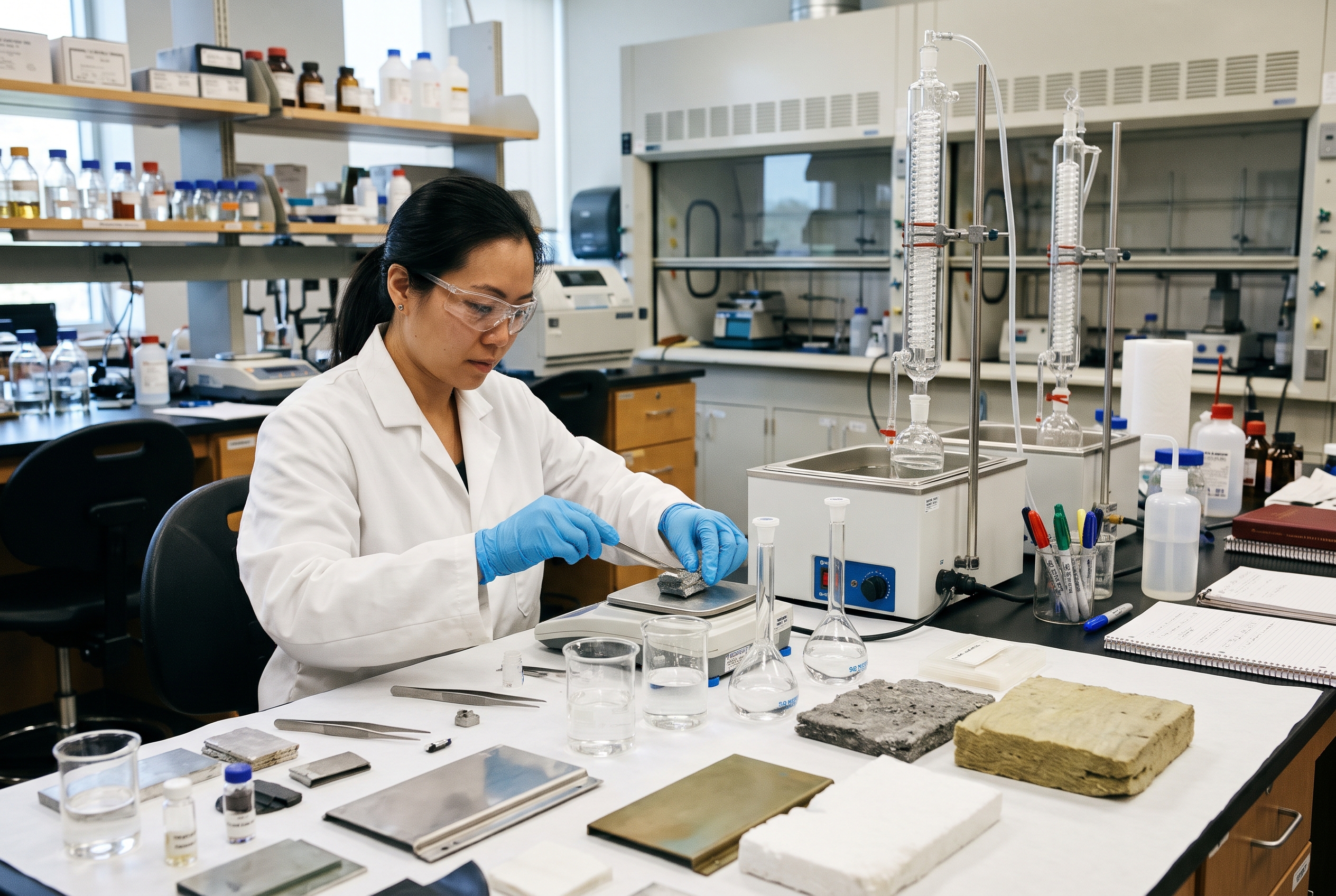
Ensuring the chemical stability of solid raw materials and industrial surface treatments is vital for preventing premature structural failure. While visual inspections can catch physical cracks or uneven finishes, many of the most destructive defects originate from invisible ionic impurities embedded deep inside coatings, adhesives, metals, and polymers. An anion test is a specialized analytical laboratory method that extracts and quantifies negatively charged ions, including chlorides, fluorides, bromides, and sulfates, from solid substrates and chemical baths. By uncovering trace ionic contamination prior to assembly or installation, engineering teams prevent hidden chemical reactions that gradually destroy high value industrial assets.
When raw materials containing residual salts are exposed to operational heat and ambient humidity, those trapped ions mobilize into aggressive corrosive agents. Without objective chemical verification during incoming quality control, manufacturers risk widespread coating delamination, fractured steel components, and costly warranty disputes.
Primary Mechanisms of Anion Induced Material Degradation
Negatively charged ions accelerate structural breakdown across multiple material classes through distinct chemical pathways.
- Stress Corrosion Cracking in Alloy Piping: Thermal insulation blankets, rubber gaskets, and industrial adhesives frequently contain trace leachable chlorides or fluorides. When condensation migrates through damp insulation onto heated austenitic stainless steel pipes, these concentrated anions initiate rapid microscopic cracking that compromises structural containment.
- Osmotic Blistering in Protective Coatings: Invisible chloride and sulfate salts left behind on abrasive blasted steel panels become trapped beneath fresh primer layers. Because protective paints remain slightly permeable to moisture vapor, these buried salts pull water through the coating film, generating osmotic pressure that causes severe paint blistering and underfilm rust.
- Chemical Imbalance in Metal Finishing Baths: Electroplating, anodizing, and chemical conversion facilities operate within narrow ionic tolerances. Unmonitored accumulations of foreign sulfates or halides disrupt uniform metal deposition, producing brittle, porous, or discolored surface layers that fail mechanical endurance inspections.
Manufacturing Sectors Requiring Material Anion Screening
Routine laboratory screening of leachable and residual anions supports strict compliance across heavy industrial supply chains.
- Oil, Gas, and Thermal Insulation Production: Suppliers of mineral wool, calcium silicate blocks, and protective pipe jacketing must satisfy strict leachable ion standards such as ASTM C871 to confirm their materials will not induce external corrosion on refinery pipelines.
- Metal Finishing and Surface Engineering: Precision fabricators supplying heavy machinery and aerospace hardware routinely audit rinse tanks and anodizing baths to guarantee consistent coating adhesion and reliable corrosion defense.
- Polymer, Elastomer, and Sealant Compounding: Industrial rubber and adhesive producers evaluate raw chemical formulations to eliminate reactive halogen residues that could leach out over time and corrode adjoining aluminum or copper housings.
- Construction Materials and Concrete Engineering: Civil material laboratories measure water soluble and acid soluble chlorides and sulfates in cement aggregates and chemical admixtures to prevent internal steel rebar corrosion and destructive concrete expansion.
Verifying chemical cleanliness before raw materials advance into full scale production is essential for safeguarding mechanical longevity and meeting global compliance standards. By incorporating a certified anion test through an Alstesting Laboratory Testing service in Malaysia, regional manufacturers and material suppliers obtain the accurate, third party analytical documentation needed to guarantee dependable product quality across Southeast Asia.
Frequently Asked Questions (FAQ)
How are anions extracted from solid materials like insulation or polymers?
Analytical chemists typically perform a controlled aqueous extraction by immersing a measured sample in boiling ultra pure deionized water for a set duration, allowing surface and leachable salts to dissolve into solution. For measuring total chemically bound halogens inside solid plastics or rubbers, laboratories utilize combustion ion chromatography to break down the material matrix completely before analysis.
What is the difference between water soluble and total anion testing?
Water soluble testing simulates realistic environmental exposure to rain or condensation by capturing only the free ionic salts that readily dissolve in moisture. Total anion analysis uses aggressive chemical digestion or high temperature combustion to release both free salts and tightly bound chemical compounds, providing a complete elemental risk profile of the raw material.
Why do industrial coating inspectors test bare metal surfaces for chlorides before painting?
Even thoroughly sandblasted steel can retain microscopic pockets of chloride salts inside surface pits, particularly in coastal or industrial zones. Painting directly over these invisible residues traps corrosive agents against the metal, almost guaranteeing premature coating failure and rapid rust formation once the asset enters service.


