Digital printing is the process of transferring digital files directly onto paper, packaging, textiles, and other materials without making conventional printing plates. Its future is being shaped by shorter production runs, faster customization, and improvements in inkjet and toner technology. Smithers projected that the global digital print market would reach $230.5 billion in value by 2032, up from $167.5 billion in 2022. That outlook points to continued expansion, though growth will vary by application, region, and technology. This article examines the market’s definition and growth, the technologies driving it, the applications benefiting most, and the economic and environmental considerations that will influence its next phase.
Digital Printing Market Growth and Definition
Digital printing is a production method in which information from a digital file is converted into printed output by inkjet, electrophotographic, or related systems. Unlike conventional offset printing, it generally does not require a physical plate for each design. The U.S. Government Publishing Office’s overview of digital printing describes the approach as direct output from digital data, a characteristic that supports variable content and economical short runs.
Market growth is commonly measured through revenue, production volume, or adoption across end-use industries; those measures are not interchangeable. Smithers’ market forecast put the global market’s value at $167.5 billion in 2022 and projected $230.5 billion by 2032, equivalent to an estimated compound annual growth rate of about 3.2% over the decade. The forecast encompasses a broad range of printed products, so it should not be interpreted as a growth rate for every digital-printing segment.
The market includes several related categories: production printing for commercial and publishing work; digital packaging and labels; wide-format graphics; and industrial printing on products or materials such as textiles. These segments differ in equipment, substrates, investment cycles, and customer demand. Their shared advantage is the ability to produce targeted quantities without the same setup requirements as traditional plate-based production.
Digital Printing Versus Conventional Printing
Digital printing is best suited to jobs where speed, design variation, or modest quantities matter. Offset lithography can remain more economical for very large, uniform runs because its cost per copy often declines as volume rises. Digital systems can reduce setup time and make one-copy or short-run production practical, although per-unit costs, print quality, and compatible materials vary by machine and application.
The distinction is not simply “old” versus “new”: print providers often use both methods. A business may print a long, standardized run by offset and use digital equipment for personalized versions, reprints, or localized editions. This hybrid production model helps explain why digital printing’s growth can coexist with continuing use of conventional presses.
Digital Printing Technologies Driving Market Growth
Two core technologies underpin much of the market: inkjet and electrophotography, often called toner or laser printing. Inkjet places droplets of liquid ink onto a substrate, while electrophotographic systems use charged imaging components and toner. Each technology has distinct strengths, and advances in printheads, inks, automation, and workflow software are expanding the range of jobs that can be produced digitally.
Inkjet Printing
Inkjet printing forms images by ejecting controlled droplets through printhead nozzles. It can be configured for paper, corrugated board, labels, fabrics, and other substrates, depending on ink chemistry and equipment design. Continuous inkjet and drop-on-demand are two major approaches: continuous systems produce a stream of droplets, while drop-on-demand systems eject droplets when and where an image requires them.
Inkjet’s expansion is supported by increasing print speed, wider color capabilities, and developments in water-based, UV-curable, and other specialized inks. The European Rotogravure Association’s analysis of packaging and publication printing has documented the industry’s continuing shift toward more flexible production models. For print buyers, inkjet can make shorter runs and versioned content more feasible; for suppliers, profitability still depends on uptime, consumables, maintenance, and the cost of preparing each job.
Electrophotographic and Toner Printing
Electrophotographic printing creates an electrostatic image and transfers toner to paper or another supported material, where heat or pressure fixes the image. It is widely used for business documents, books, direct mail, and commercial print jobs. Its strengths include consistent output, quick job changes, and mature finishing options, while limitations can include equipment speed at high volumes and restrictions on certain substrates.
The choice between toner and inkjet depends on the job rather than a universal technology winner. Buyers and print providers compare run length, image quality, paper or material compatibility, finishing needs, and total cost of ownership. As digital systems improve, the practical boundary between short-run digital work and longer conventional runs continues to move.
Automation, Workflow Software, and Artificial Intelligence
Workflow technology connects file preparation, color management, job scheduling, press operation, and finishing. Automation can reduce manual handoffs and help printers manage many small jobs efficiently. Artificial intelligence is increasingly used in adjacent tasks such as estimating, predictive maintenance, image preparation, and production planning, although results depend on reliable data and careful human oversight.
This software layer matters because digital printing’s flexibility can create operational complexity: every job may have different specifications, deadlines, and artwork. Automated preflight checks, web-to-print portals, and integrated management information systems can help providers process that variation without losing control of quality or delivery times.
Applications Expanding Digital Printing Demand
Digital printing’s market prospects are closely tied to applications where customization, speed, or inventory control has economic value. Packaging, labels, commercial communications, books, and wide-format graphics are established areas, while textile and industrial printing offer additional avenues. Demand in each segment responds to different business needs, from product differentiation to on-demand production.
Packaging and Labels
Digital packaging and label printing allow brands to produce short runs, regional variations, seasonal designs, and customized versions without committing to a large quantity of identical packaging. This can be useful for product launches, limited editions, test markets, and packaging that requires frequent information changes. Digital production may also reduce obsolete inventory when demand or product specifications shift.
Packaging remains a major opportunity, but adoption depends on more than press capability. Food-contact rules, durability, color consistency, finishing, and integration with existing converting lines all affect whether a digital process is suitable. Smithers identifies packaging as an important part of the wider digital-printing market, while industry adoption continues to be shaped by investment costs and the economics of each run.
Commercial Print, Books, and Direct Mail
Commercial printers use digital equipment for brochures, reports, business materials, and promotional pieces that need short lead times or multiple versions. In book production, printing to demand can help publishers and distributors avoid holding excessive inventory and can make backlist titles easier to keep available. Direct mail can also incorporate variable text or images, allowing content to be tailored to audience segments.
These uses reflect a shift from printing solely for scale to printing for relevance and timing. Variable-data printing connects a digital file to recipient or product information, enabling different text, images, or codes within one production run. Its commercial value depends on the quality of the underlying data, privacy compliance, and whether personalization improves response enough to justify the additional work.
Wide-Format, Textile, and Industrial Printing
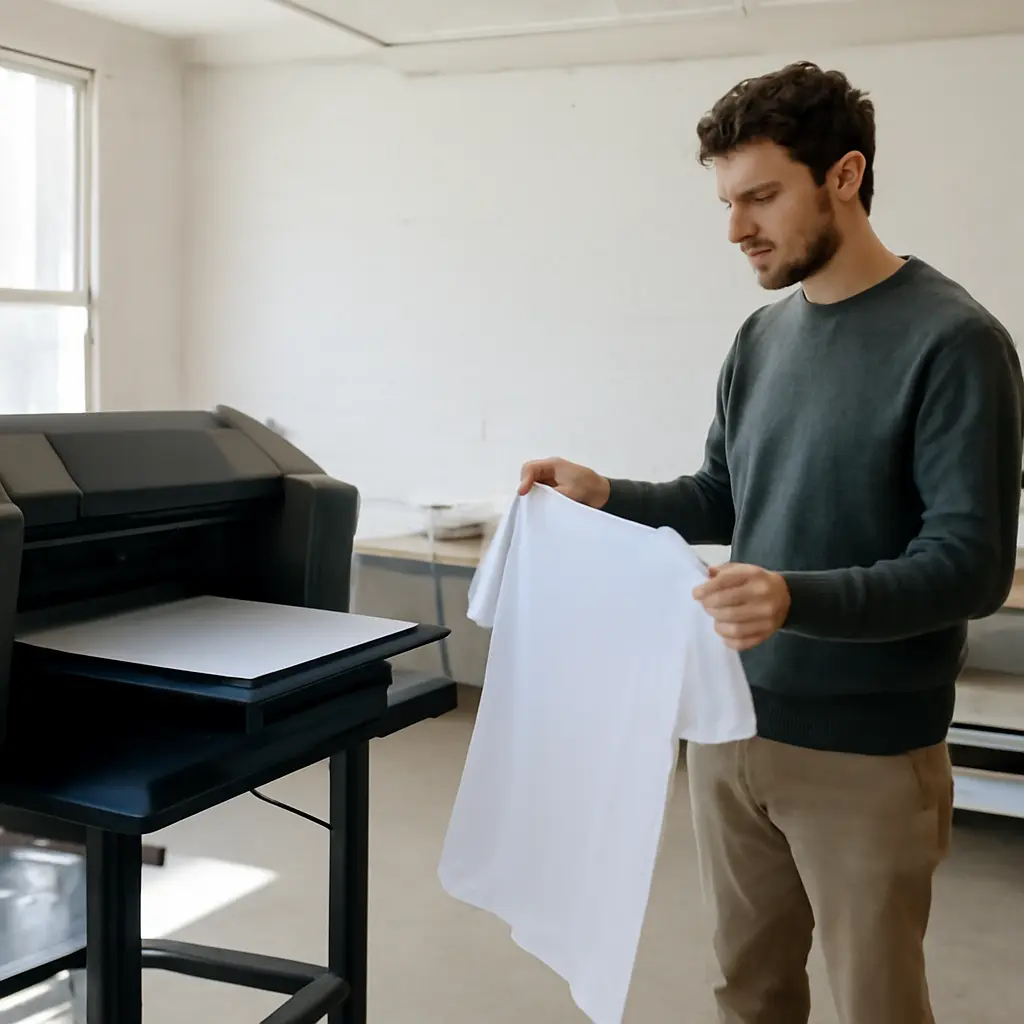
Wide-format digital printing serves signage, displays, vehicle graphics, interior décor, and other large graphics. It makes it possible to create customized visuals in quantities that would be impractical to produce using some conventional methods. Textile printing applies digital designs to fabric for apparel, home furnishings, and specialty products, while industrial systems can print functional or decorative layers on items such as panels and components.
These segments benefit from digital design-to-production workflows, but each has technical requirements involving color durability, substrate treatment, curing, and product performance. Growth therefore depends on the development of compatible inks and equipment as well as demand for customized goods and shorter production cycles.
Market Opportunities, Constraints, and Sustainability
Digital printing’s growth is supported by demand for personalization, faster turnaround, and smaller production quantities. At the same time, equipment investment, consumable costs, skilled labor, and competition from other communication channels can restrain adoption. Environmental performance is also increasingly relevant, but it must be assessed across the full production process rather than inferred from the printing method alone.
Personalization and On-Demand Production
On-demand production means printing items in quantities closer to actual need, while personalization changes content for a particular customer, region, or use. Together, these capabilities can reduce the need to store large quantities of preprinted materials and make rapid design updates possible. They are particularly useful where product information, language, or branding changes frequently.
These advantages are not automatic. A short digital run may have a higher unit cost than a large conventional run, and inventory savings must be weighed against setup, shipping, and finishing expenses. Businesses should compare total lifecycle costs and service requirements rather than choosing a process based on press price or per-copy cost alone.
Investment and Workforce Challenges
Digital presses can require substantial capital investment, and their financial return depends on consistent utilization, suitable job volume, and efficient workflows. Providers must also manage consumables, service agreements, color standards, and downstream finishing. Smaller firms may face particular challenges when evaluating equipment that requires both new technical skills and a dependable pipeline of work.
The U.S. Bureau of Labor Statistics’ Occupational Outlook Handbook tracks employment and outlook for printing-related occupations, reflecting how production technology and market demand affect the workforce. Digital operations increasingly require people who can combine print knowledge with data handling, color management, software, maintenance, and customer service. Training is therefore part of the investment decision, not an afterthought.
Environmental Considerations
Digital printing may help reduce overproduction by making short runs and reprints more practical, but environmental outcomes vary by material, ink, energy use, waste, and transport. The U.S. Environmental Protection Agency’s guidance on sustainable materials management emphasizes considering materials across their life cycle, including sourcing, production, use, and end-of-life management.
A meaningful comparison should examine spoilage rates, make-ready waste, recyclable substrate compatibility, ink and coating requirements, energy consumption, and whether printed products can be recovered after use. Printers and buyers can improve performance by specifying recyclable materials where appropriate, monitoring waste, and asking suppliers for documented environmental data rather than relying on broad claims.
Future Outlook for Digital Printing
The future of digital printing is likely to involve continued growth alongside conventional production, rather than a complete replacement of offset or other established processes. Smithers’ forecast of $230.5 billion in global market value by 2032 signals a substantial opportunity, but the pace will depend on equipment economics, application-specific performance, and how effectively providers integrate digital systems into broader production lines.
Several developments will be especially important: faster and more reliable inkjet presses, improved ink and substrate compatibility, better automation, and practical uses for variable data. Packaging and labels are likely to remain prominent because brands need flexibility and product differentiation, while books, commercial print, textiles, and industrial applications will grow where on-demand production provides a clear business case.
The chart implied by Smithers’ forecast would show a rise from $167.5 billion in 2022 to $230.5 billion in 2032, but this is a projected market-value trajectory, not a guarantee. Businesses assessing the opportunity should review forecasts alongside their own job mix, customer requirements, capacity, and total cost of ownership.
Conclusion
Digital printing combines direct-from-file production with technologies such as inkjet and electrophotography, enabling short runs, rapid changes, and customized output. Smithers’ projection of growth from $167.5 billion in 2022 to $230.5 billion by 2032 underscores the sector’s potential, while packaging, labels, commercial print, books, wide-format graphics, textiles, and industrial uses provide distinct sources of demand.
Realizing that potential will require more than buying faster equipment. Print providers and buyers should assess workflow automation, investment costs, workforce skills, substrate compatibility, and environmental impacts together. For further evaluation, compare current market forecasts with application-specific requirements, request verified performance data from equipment and material suppliers, and pilot new processes before scaling them across a production operation.
Sources: Smithers, The Future of Digital Printing to 2032, https://www.smithers.com/services/market-reports/printing/the-future-of-digital-printing-to-2032; U.S. Government Publishing Office, Digital Printing, https://www.gpo.gov/how-to-work-with-us/agency/digital-printing; European Rotogravure Association, Publications and Industry Information, https://www.era.eu.org/; U.S. Bureau of Labor Statistics, Occupational Outlook Handbook: Printing Workers, https://www.bls.gov/ooh/production/printing-workers.htm; U.S. Environmental Protection Agency, Sustainable Materials Management, https://www.epa.gov/smm/sustainable-materials-management-non-hazardous-materials-and-waste-management-hierarchy.