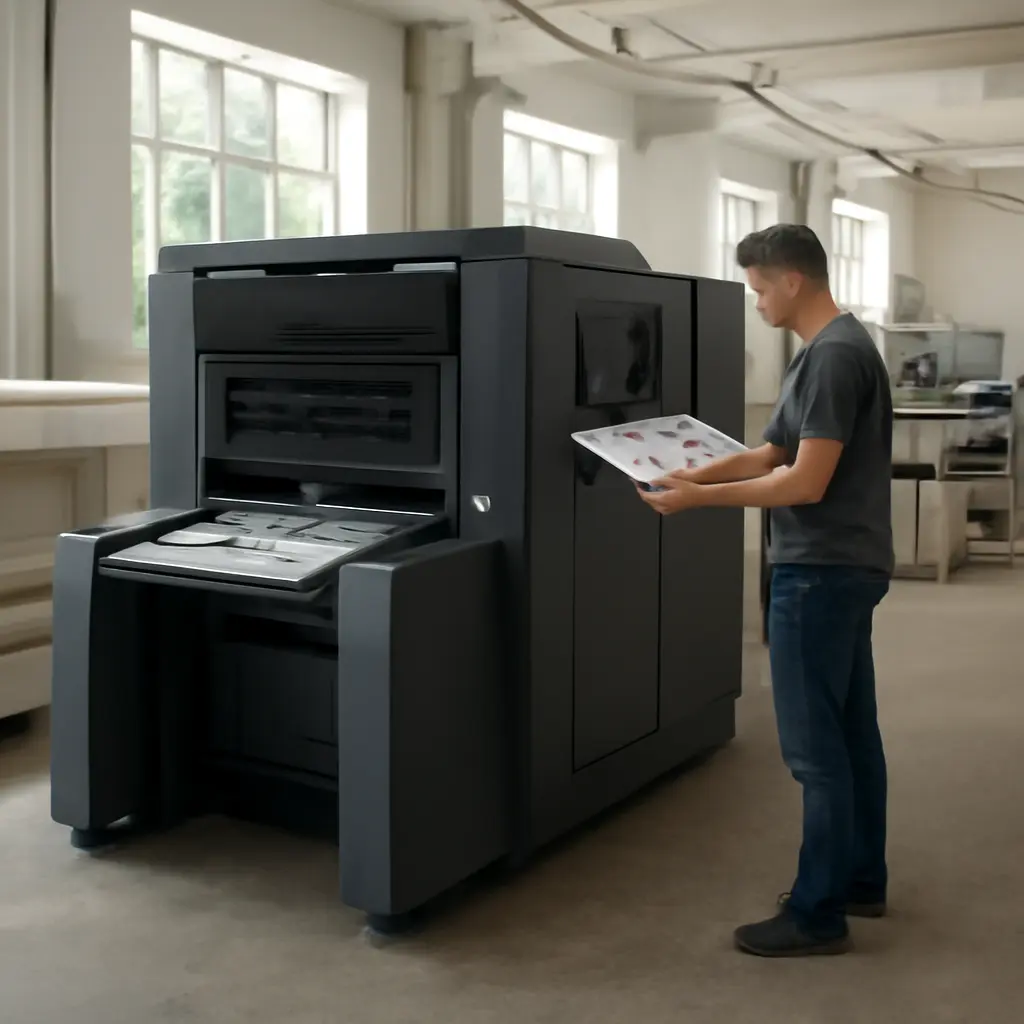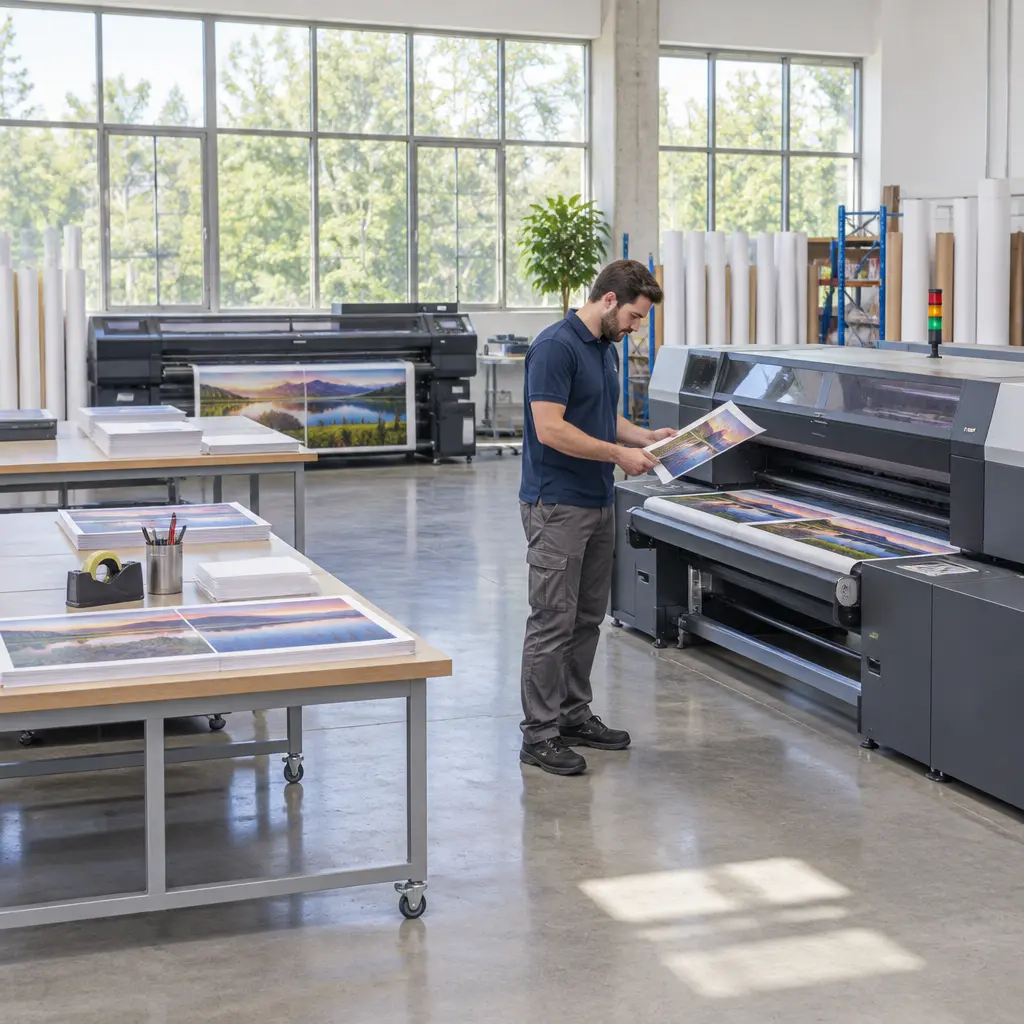
Digital printing is the production of printed materials from digital files, without the conventional plate-making steps used in offset printing. Its market is being reshaped by faster inkjet and toner systems, automation, cloud-based workflows, and increasingly varied materials. Smithers estimated that global digital print output would reach $230.5 billion in value in 2024, reflecting the technology’s growing role in packaging, labels, commercial print, and personalized products. These changes matter because they allow print providers to handle shorter runs, quicker turnarounds, and more customization—while placing new demands on equipment investment, skills, and environmental performance.
Technology adoption reshapes digital printing market capabilities
Technology adoption in digital printing is the integration of equipment, software, materials, and production practices that improve how print is designed, prepared, produced, and delivered. The adoption process is not limited to buying a press: it can include workflow automation, variable-data applications, color management, connected equipment, and new inks or substrates. Together, these capabilities help printers respond to demand for customized products and smaller, more frequent print runs.
Digital printing’s production advantage
Digital printing transfers a digital image directly to a substrate, usually through inkjet or electrophotographic (toner) processes. Unlike conventional offset printing, it generally does not require a separate printing plate for each job. This can reduce setup time and make short runs economically practical, although the best process depends on the run length, substrate, quality requirements, and finishing costs.
Smithers’ 2024 market analysis put the value of worldwide digital print output at an estimated $230.5 billion in 2024 and projected continued growth through 2029. Market value is not the same as printed volume: digital printing may account for a smaller share of total print volume while capturing a larger share of high-value, customized, or time-sensitive work.
Key technology categories
The main digital-printing categories are production inkjet and electrophotographic printing, supported by specialized systems for particular applications. Inkjet deposits droplets of ink onto a surface and is used across commercial, wide-format, textile, and packaging markets. Electrophotographic systems form images using charged toner particles and are common in office and production printing. Wide-format printers serve signs, displays, and décor; direct-to-garment and direct-to-film systems apply designs to apparel; and digital label and packaging presses support brand variation and shorter production runs.
These categories are not interchangeable. A printer choosing equipment must consider image quality, speed, media compatibility, ink or toner cost, finishing, maintenance, and the volume needed to recover its investment.
Automation improves digital printing market workflow efficiency
Workflow automation is the use of software and connected production systems to move jobs from order entry and file preparation through printing, finishing, and fulfillment with fewer manual handoffs. It is reshaping digital print economics by reducing repetitive tasks, improving consistency, and helping providers schedule a greater number of smaller jobs.
Cloud workflows and job automation
Cloud-based print management lets customers submit files and orders online while production teams review, route, and track jobs digitally. Preflight tools can flag missing fonts, low-resolution images, incorrect bleed, and color-space problems before a job reaches the press. Automated imposition arranges pages or labels to use a sheet or web efficiently, while management information systems can connect estimates, scheduling, inventory, and production reporting.
The practical benefit is a more repeatable workflow, not simply faster printing. Automation can lower the time spent on job setup and reduce avoidable reprints, but it depends on accurate job data, compatible systems, staff training, and clear procedures for exceptions.
Variable data and personalization
Variable-data printing changes text, images, or other elements from one printed item to the next while producing a single job. It can support personalized direct mail, regionalized packaging, unique product identifiers, and campaign materials tailored to customer segments. The technology connects digital printing with customer databases and marketing systems, making data governance and privacy controls essential parts of production.
Personalization is valuable when the data and message are relevant. Printers and customers must verify the accuracy of data, obtain appropriate permissions, and protect personal information; otherwise, automation can scale mistakes as readily as it scales production.
Inkjet and materials expand digital printing market applications
Advances in inkjet heads, inks, curing, and substrate handling are widening the range of work that digital presses can produce. This expansion links equipment adoption to new applications in packaging, labels, textiles, décor, and industrial printing, where the print surface and performance requirements differ substantially.
Packaging and label production
Digital presses allow packaging and label producers to create multiple versions, test designs, and produce shorter runs without the same plate-change requirements as conventional processes. This is useful for seasonal products, regional language variations, limited releases, and products requiring serialized codes. Smithers has identified packaging and labels as important growth areas for digital print as brands seek shorter lead times and more differentiated packaging.
Adoption still requires careful qualification. Food-contact rules, ink migration, scuff resistance, color consistency, converting compatibility, and recycling requirements can determine whether a digital process is suitable for a given package. A press’s ability to print on a material does not by itself establish that the finished package meets regulatory or performance specifications.
Textiles, décor, and industrial printing
Digital textile printing applies designs to fabric using processes such as direct-to-fabric or direct-to-garment printing. It supports short collections and on-demand production, reducing the need to hold large inventories of preprinted designs. Wide-format inkjet also enables customized wall coverings, displays, and interior décor, while industrial inkjet can deposit functional materials in specialized manufacturing applications.
These uses depend on the match between ink chemistry and substrate. Textile jobs may require pretreatment, fixation, and washing; décor applications may need lightfastness and abrasion resistance. As a result, equipment adoption often includes investment in finishing, quality testing, and operator expertise—not just the printer itself.
Data and connectivity transform digital printing market operations
Connected production uses sensors, software, and data exchange to monitor equipment and coordinate work. In digital printing, these tools can reveal bottlenecks, support predictive maintenance, and improve visibility across multiple machines or locations. Their value depends on whether collected data leads to practical decisions about scheduling, service, and quality.
Connected presses and predictive maintenance
A connected press can report operating status, consumable levels, faults, and production progress to a management system or service provider. Predictive maintenance uses equipment data to identify signs of developing problems before they cause an unplanned stoppage. This can be especially valuable for high-throughput production, where downtime disrupts schedules and delivery commitments.
Connectivity also creates cybersecurity and continuity risks. Printers should control user access, secure networks, back up critical job and configuration data, and establish procedures for system outages. Integration projects should define who owns production data and how it can be accessed or transferred if a supplier relationship changes.
Color management and quality control
Color management uses calibrated devices, standardized profiles, measurement, and production controls to reproduce color more consistently across screens, presses, substrates, and locations. Automated inspection can identify missing or misplaced print, color variation, and other defects as a job runs. These technologies are important when a brand expects packaging or marketing materials to match across multiple production sites.
Quality systems do not eliminate the need for skilled operators. Substrate changes, environmental conditions, ink behavior, and finishing can affect the final appearance, so measurement standards and documented approval processes remain necessary.
Sustainability influences digital printing market adoption
Sustainability considerations include material use, energy consumption, waste, chemical handling, transport, and the end-of-life options for printed products. Digital printing can reduce setup waste and make demand-led production easier, but its environmental impact varies by press, ink, substrate, run length, and finishing method.
Short runs, inventory, and waste
Because digital production can make shorter runs more economical, businesses may print closer to actual demand and reduce the risk of obsolete inventory. It can also avoid some plate-making and setup materials used in conventional workflows. These potential gains should be assessed across the full job: a digital process may use different inks, coatings, energy, or substrates, and a small run is not automatically more sustainable in every case.
A useful comparison measures material input, spoilage, energy, transport, and product performance for equivalent jobs. Printers can also track makeready waste and reprint rates, then use those results to identify where automation or process changes produce measurable improvements.
Substrates, inks, and recyclability
The compatibility of inks and coatings with recycling systems is a significant consideration for packaging and paper products. The European Commission’s Packaging and Packaging Waste Regulation, which entered into force in 2025, sets a framework intended to make packaging recyclable and reduce packaging waste across the European Union. Printers and brand owners therefore need to assess how print choices affect sorting, repulping, and packaging design requirements in the markets where products are sold.
Sustainability claims should be specific and supported by evidence. A business should distinguish between reduced setup waste, recycled content, recyclability, and lower lifecycle emissions rather than treating them as equivalent benefits.
Investment and workforce challenges shape digital printing market growth
Technology adoption brings commercial opportunity but also capital, operational, and workforce challenges. A digital press may require substantial investment in equipment, software, service agreements, compatible finishing, and materials. Printers need a realistic production forecast and a clear plan for how the new capacity will generate revenue.
Return on investment and hybrid production
Return on investment depends on utilization, labor, consumables, maintenance, job mix, and the cost of alternatives. Digital equipment tends to be attractive when setup savings, short-run flexibility, or personalization compensate for its per-unit production costs. Conventional offset or flexographic printing may remain more economical for some long runs, so many businesses use hybrid production and route each job to the appropriate process.
A sound investment assessment should model several demand scenarios, including machine utilization and finishing capacity. It should also account for workflow integration, staff training, service availability, and the cost of qualifying new substrates or inks.
Skills and implementation planning
Modern print operations combine press operation with file preparation, color science, workflow administration, data handling, maintenance, and customer service. The transition can expose skills gaps, particularly where staff must manage connected systems or troubleshoot complex ink-and-substrate combinations. Training should therefore be included in the adoption plan rather than treated as a one-time equipment handover.
A phased rollout can reduce risk: identify a target application, test representative jobs, measure quality and throughput, integrate the workflow, and then expand production. This approach gives a printer evidence about actual job costs and customer demand before committing to broader deployment.
Conclusion: technology adoption reshapes digital printing market priorities
Technology adoption is changing digital printing through more capable inkjet and toner systems, automated workflows, variable-data personalization, connected equipment, and wider material choices. These capabilities help print businesses serve packaging, labels, commercial work, textiles, décor, and other applications with more flexibility. At the same time, investment decisions must account for workflow integration, quality control, cybersecurity, sustainability, and workforce development.
For print providers and buyers, the next step is to evaluate technology against real jobs rather than headline press specifications: compare cost, turnaround, quality, substrate requirements, and environmental performance, then run a measured pilot. Smithers’ market research and guidance from industry and packaging regulators can help organizations track demand and compliance as digital production continues to evolve.
Sources: Smithers, The Future of Digital Printing to 2029, https://www.smithers.com/services/market-reports/printing/the-future-of-digital-printing-to-2029; European Commission, Packaging and Packaging Waste Regulation, https://environment.ec.europa.eu/topics/waste-and-recycling/packaging-waste_en